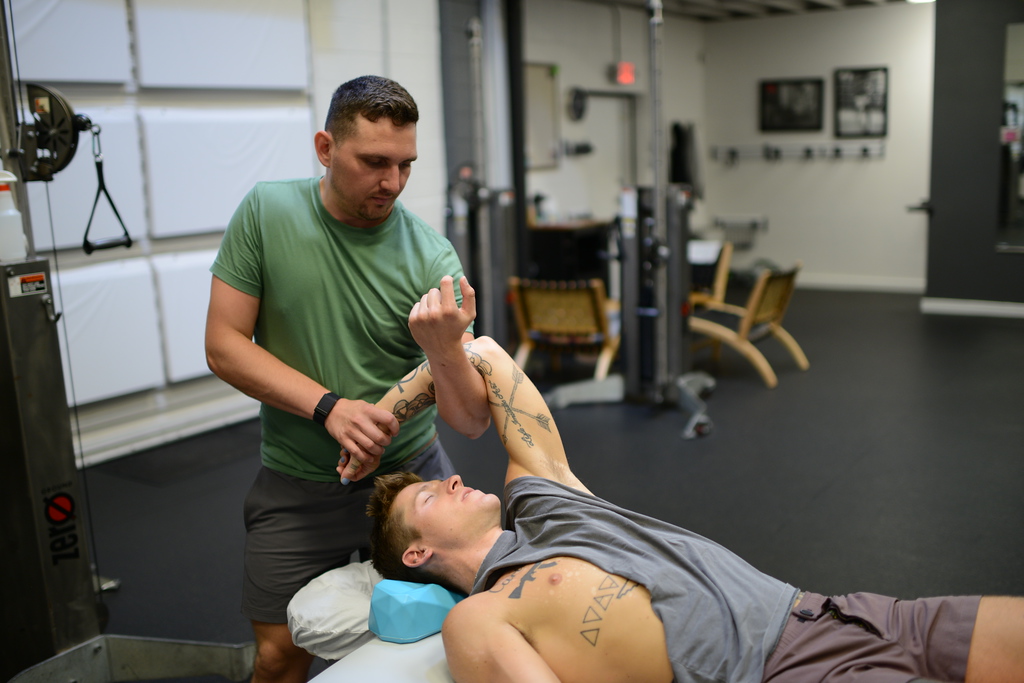
Wear clothes you can move in.
Comfortable athletic clothing works well for FST. Chris explains any skin contact or draping if you choose to include another method.
 RECOVERY
ADVANCED ASSISTED STRETCH THERAPY · AUSTIN, TX
One-to-one care with Chris Corona, a licensed massage therapist and Level 4 Fascia Stretch Therapy specialist in a private Central Austin studio. Settle onto the table and let Chris guide your movement. Each stretch follows your comfort and goals.
YOUR FIRST VISIT
The first 15–20 minutes are for your history, goals, and movement review. Hands-on care follows within your appointment time.
4111 Marathon Blvd, Suite 110 · Austin
Free parking in front. Get directions ↗
Level IV · Stretch to Win’s highest training level.
One-to-one care with Chris Corona.
01 / WHAT TO EXPECT
An easier reach, a more comfortable turn, or support for your usual activity. Tell Chris what you want to work toward.
Share your activity, health history, and what feels limited. Try a comfortable movement to give you and Chris a starting point.
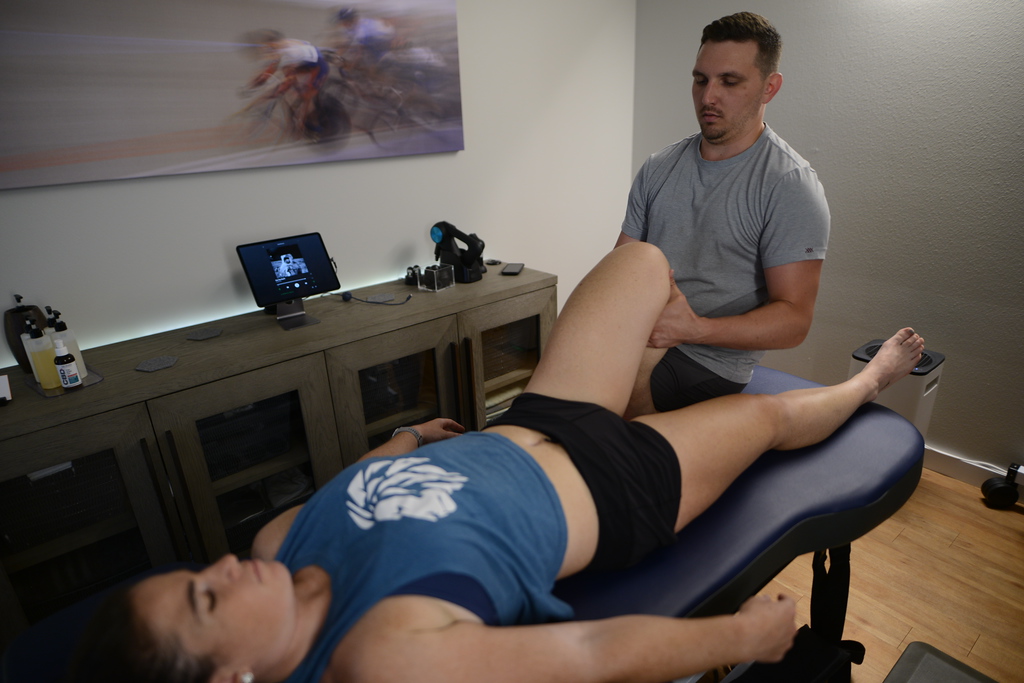
Chris supports and guides you on the table. Together, adjust the position, pressure, and pace to your comfort.
Try the movement again. Discuss what changed, what still needs attention, and whether another visit would be useful.
Comfortable athletic clothing works well for FST. Chris explains any skin contact or draping if you choose to include another method.
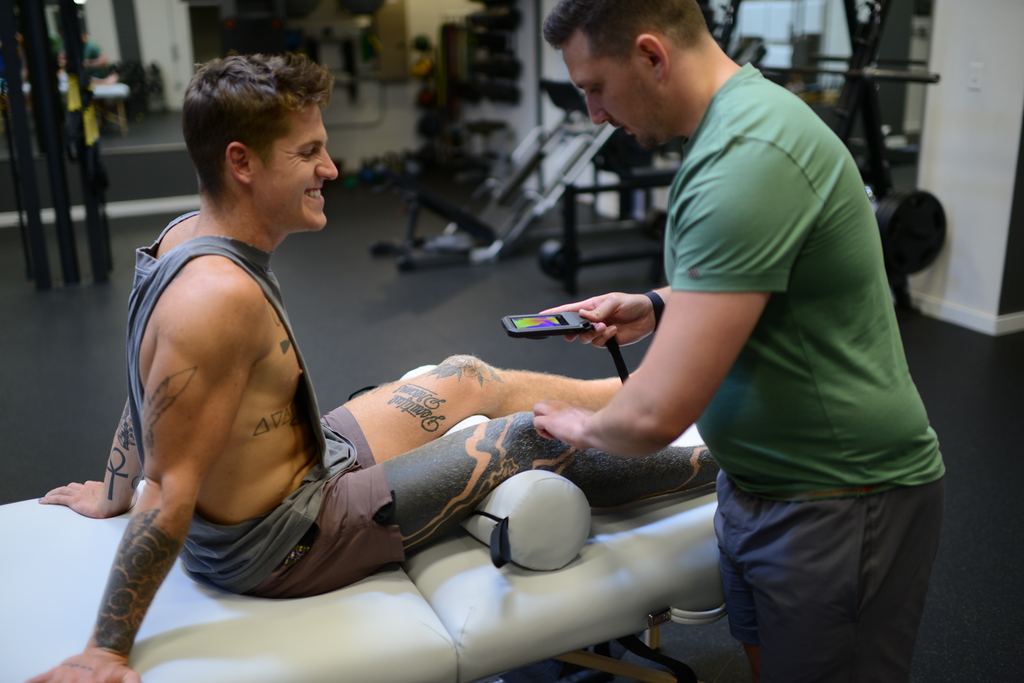
Pillows and padded straps can support a resting limb while Chris works elsewhere. Ask for less pressure, a different position, or a pause. Straps can be adjusted or removed.
Chris with Carter Miles · 2022 photoshoot. See the current clinic ↗
More about your first visit ↗02 / YOUR PRACTITIONER
Your visit is with Chris, from the first conversation to the final movement check.
Chris holds Level IV certification, the highest level in Stretch to Win’s current FST program. This training adds more detailed movement checks and specific work around the hips, shoulders, spine, ribs, feet, and ankles.
He uses that training to adjust the support, angle, pressure, and pace for you. A smaller movement, a different direction, or a pause may be the useful next step.
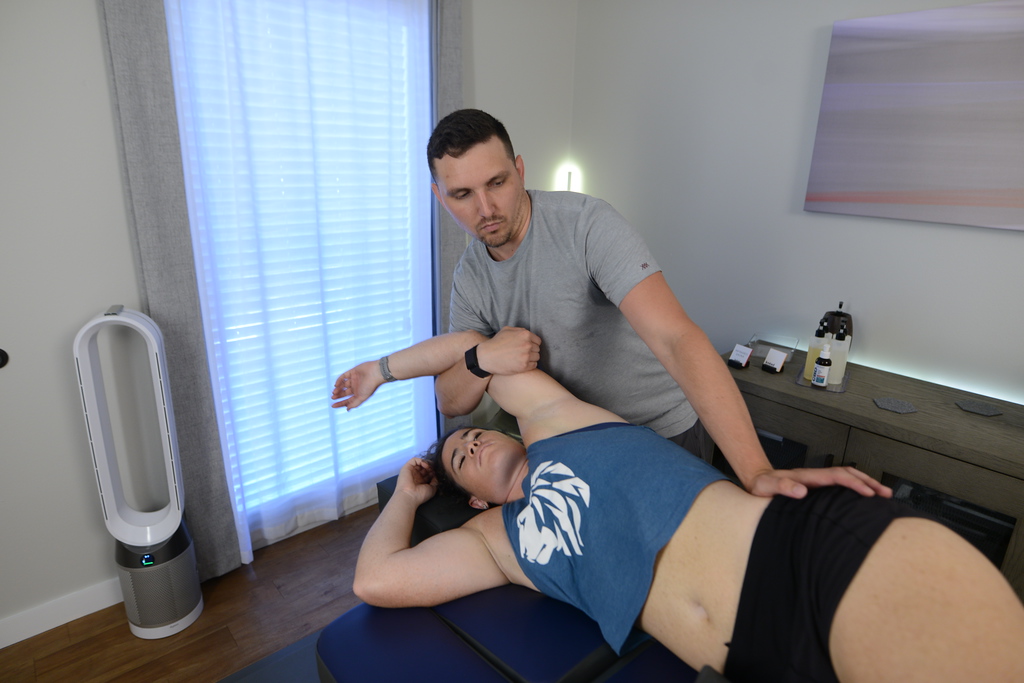
Chris supports your limb so you can settle into the movement.
He changes the angle and range as your movement responds.
Your comfort, breathing, and what you tell him guide the next movement.
Chris Corona · Licensed massage therapist · Texas license MT133029
Meet Chris ↗FROM AN FST CLIENT
“I have told friends and family about how great Chris is.”
03 / HOW FST DIFFERS
FST combines supported movement with work around the joint capsule and connected tissues. Chris changes the angle, direction, and pressure as you respond.
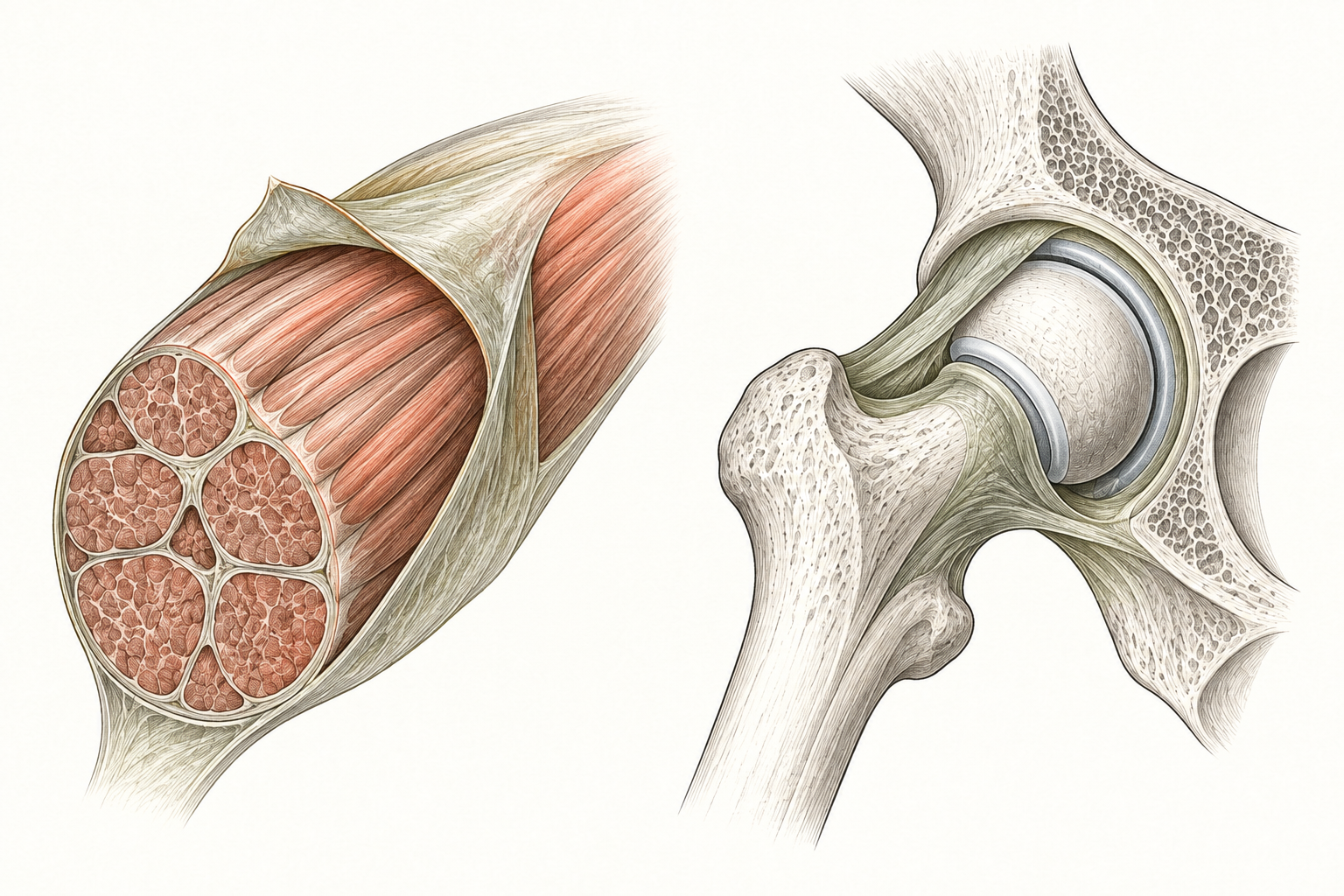
A closer look at the tissues Chris works with. Olive shading highlights fascia and the joint capsule. Simplified illustration.
TractionGentle pull
CompressionSupportive pressure
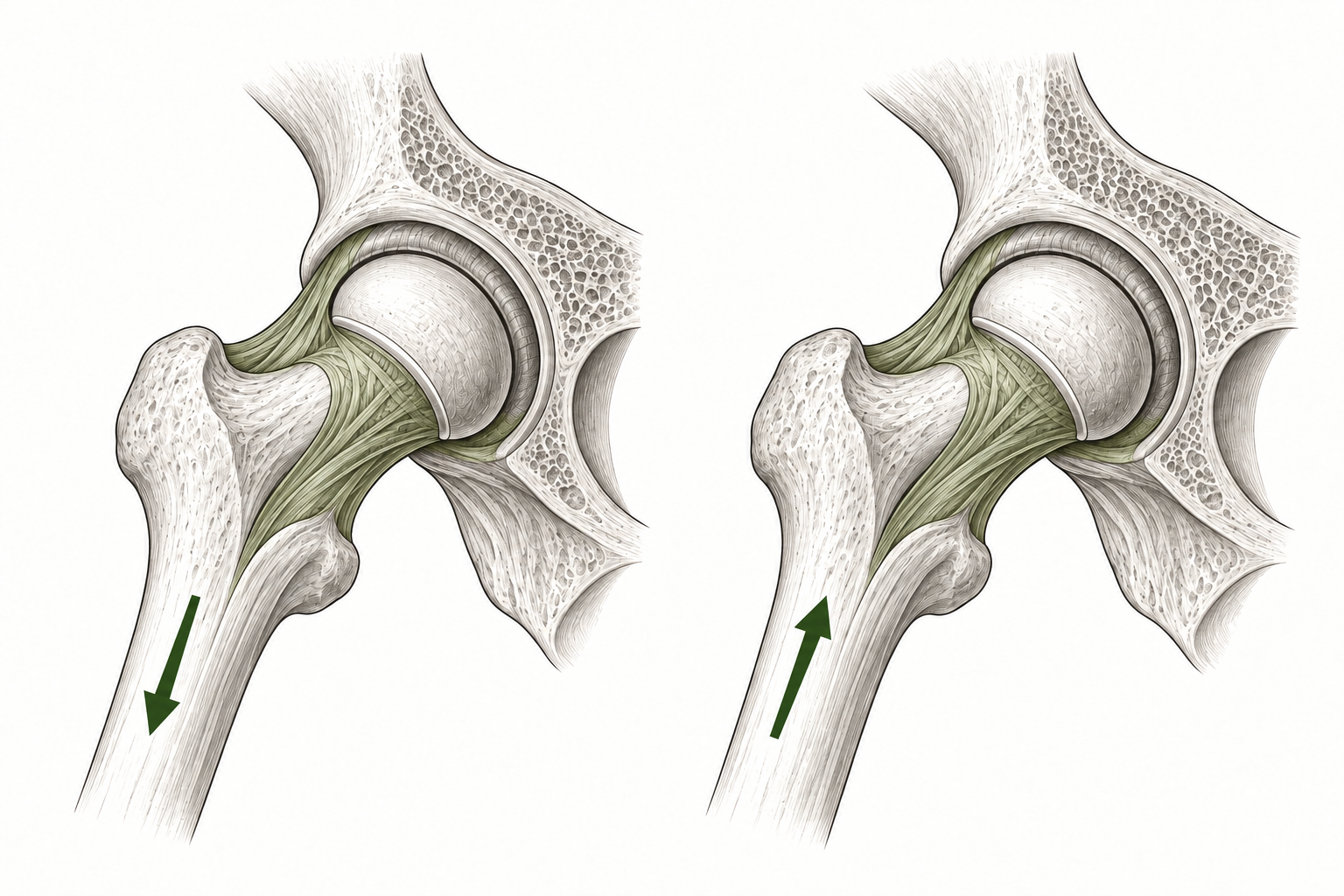
Traction is a gentle pull away from the joint. Compression is controlled pressure toward it. Chris can change the direction of pressure, the angle, or the range to suit the movement and support you need. Your response helps him choose the next step.
You can ask for a change or stop at any point. The aim is movement that feels useful and comfortable.
Assisted stretching is the broad term for help from another person. FST is a specific method within it, with an emphasis on the joint capsule, connected tissues, and movement in several directions.
FST can include dynamic movement and contract–relax techniques. Chris chooses and adjusts these options throughout the session, using touch, your breathing, and what you tell him.
Someone helps you move or hold a stretch. The term covers several methods, including FST.
Moving through a range, often repeatedly. Leg swings before activity are one example.
Static stretching holds a position. PNF may ask you to gently contract a muscle, relax it, then stretch.
Joint-capsule work with controlled traction, supported movement in several directions, and adjustments based on touch, breathing, and your feedback.
The method and the person providing it both matter. StretchLab describes PNF, static, and dynamic stretching. Stretch Zone describes a method built around positioning, straps, and the stretch reflex.
A static stretch holds a position; dynamic stretching moves through a range; PNF can combine muscle contraction and relaxation. FST brings these possible elements into a method that emphasizes the joint capsule, controlled traction or compression, and movement in several directions.
Chris continually changes the angle, support, and force in response to what he feels and what you report. This combination explains his approach more clearly than the word “fascia” alone. Other assisted-stretching methods may share some of these features; joint work is not exclusive to FST.
Sources: The founders explain continuous assessment · Stretch to Win: method and training · Research review: stretching methods · StretchLab: its approach · Stretch Zone: its method · OpenStax: joint anatomy · Fascia anatomy
04 / YOUR OPTIONS
You do not need to know which method to book. All new clients start with a first visit to discuss their goals and suitable care.
Self-stretching gives you a way to move on your own between visits. During an assisted session, Chris can support you, change the angle, and respond to what he feels and what you report. Ask him which movements may fit your routine.
05 / YOUR NEXT STEP
Choose a first visit below. You and Chris will discuss what fits your goals and comfort before hands-on care begins.
FIRST-VISIT PRICES
New clients: choose “FIRST TIME CLIENT” in MassageBook.
First visits must be paid in full in advance.
Choose the amount of time that feels right for you. Both visits include a conversation, movement review, and hands-on care. The 90-minute option gives you another 30 minutes together.
The first 15–20 minutes are for your history, goals, and movement review. Hands-on care follows within your appointment time.
Your time is one-to-one with Chris in his private studio. The support, pace, and pressure follow your needs.
Optional kinesiology taping adds $20 to a first visit. DFR® is not usually needed at the first visit.
Returning client? Book your next sessionNo. Start with your current movement. Chris adjusts the range and support to you.
You do not need to push through pain. Tell Chris what you feel so he can change the pressure, angle, or position, or stop.
Wear comfortable athletic clothing. Padded straps may support a resting limb while Chris works elsewhere. You can ask him to adjust or remove them at any time.
Choose a 60- or 90-minute first visit. You and Chris can discuss FST, massage, or combined care during the appointment. You do not need to select a method in advance.
Dynamic stretching means moving through a range. FST is a specific assisted method that can include this type of movement, along with support, breathing, and ongoing checks of your response.
Level IV is the highest level in Stretch to Win’s current four-level FST program. It builds on earlier training with more detailed movement assessment and sports applications.
There is no fixed number for everyone. Discuss your response, goals, and preferences with Chris before deciding on another visit.
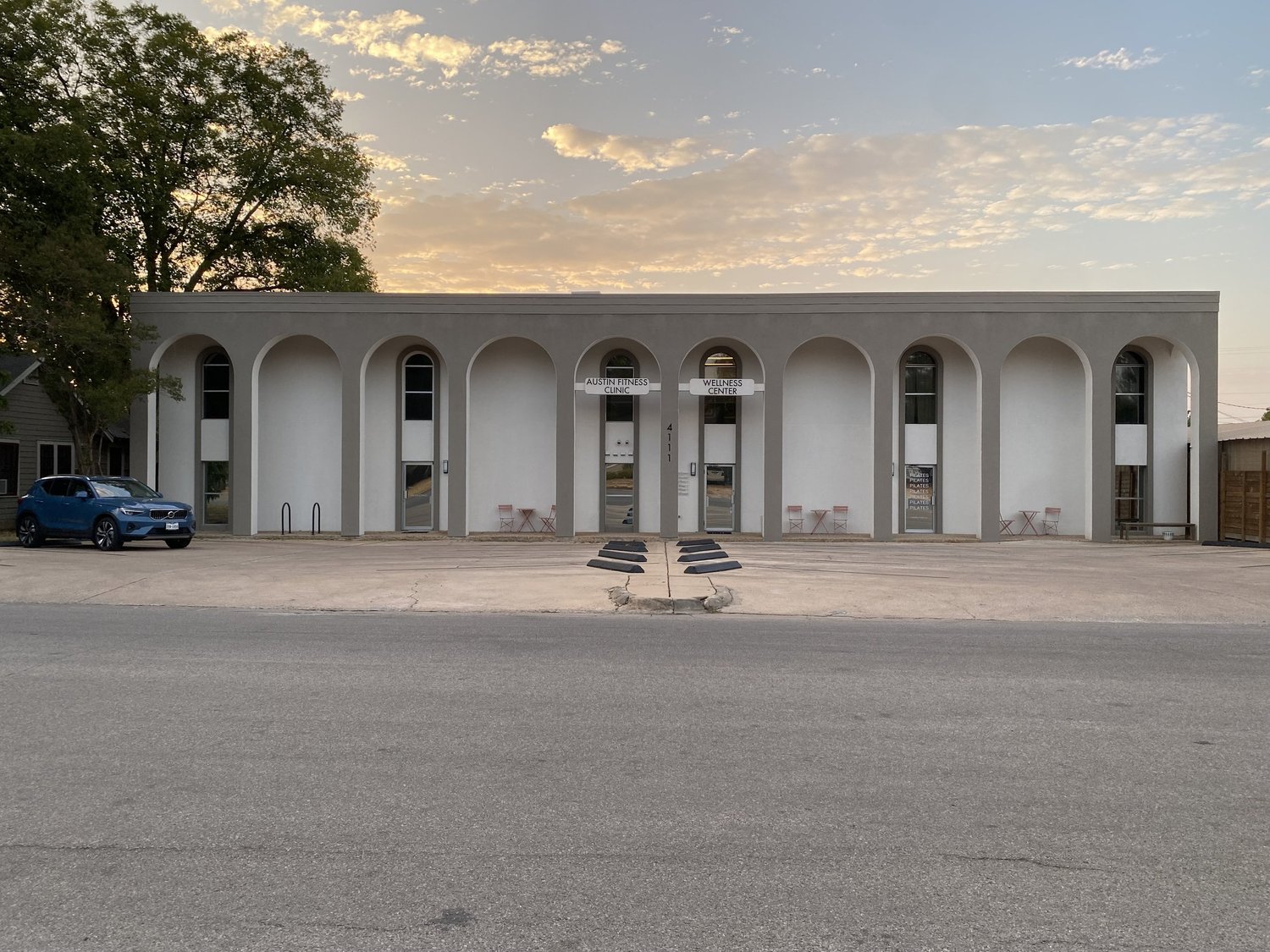
CENTRAL AUSTIN
Free parking is available in front of the clinic.
View Knead Recovery on Google Maps ↗
Questions about your visit? Call (512) 348-8658.
06 / EXPLORE THE METHOD
Explore the tissue, training, and research behind the approach. Open the topics that interest you.
Fascia is connective tissue that surrounds and connects parts of the body, including muscles. It helps transmit force and contains nerves that contribute to what you feel.
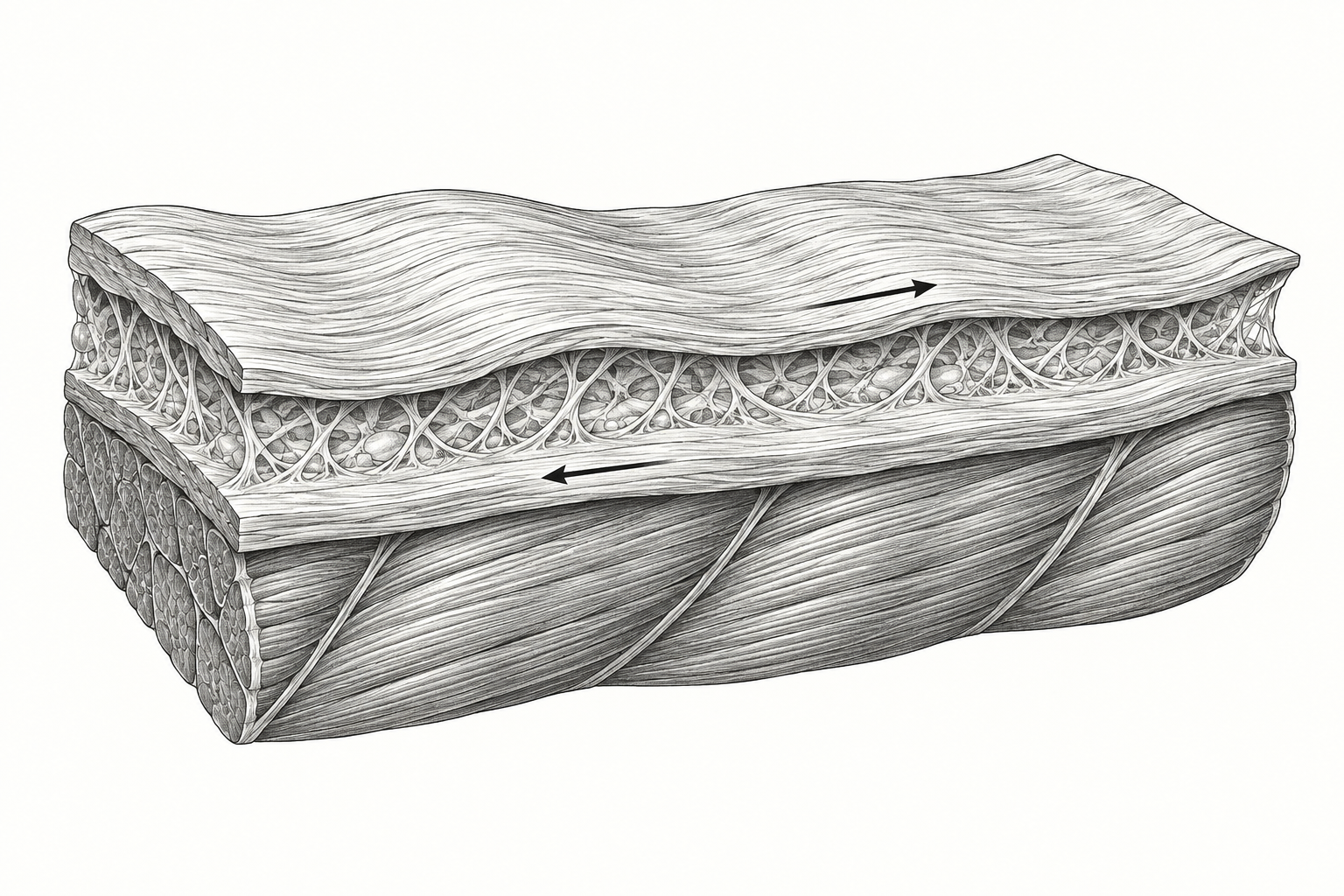
Some layers can slide past one another as you move. Their structure varies across the body. Feeling tight does not, by itself, tell us which tissue needs attention.
Sources: Stecco et al.: structure of deep fascia · Fede et al.: nerves in superficial fascia
Chris uses touch, movement, and your feedback to notice how you respond. If resistance changes, he can change the angle, pace, or support. Your breathing and comfort help guide him.
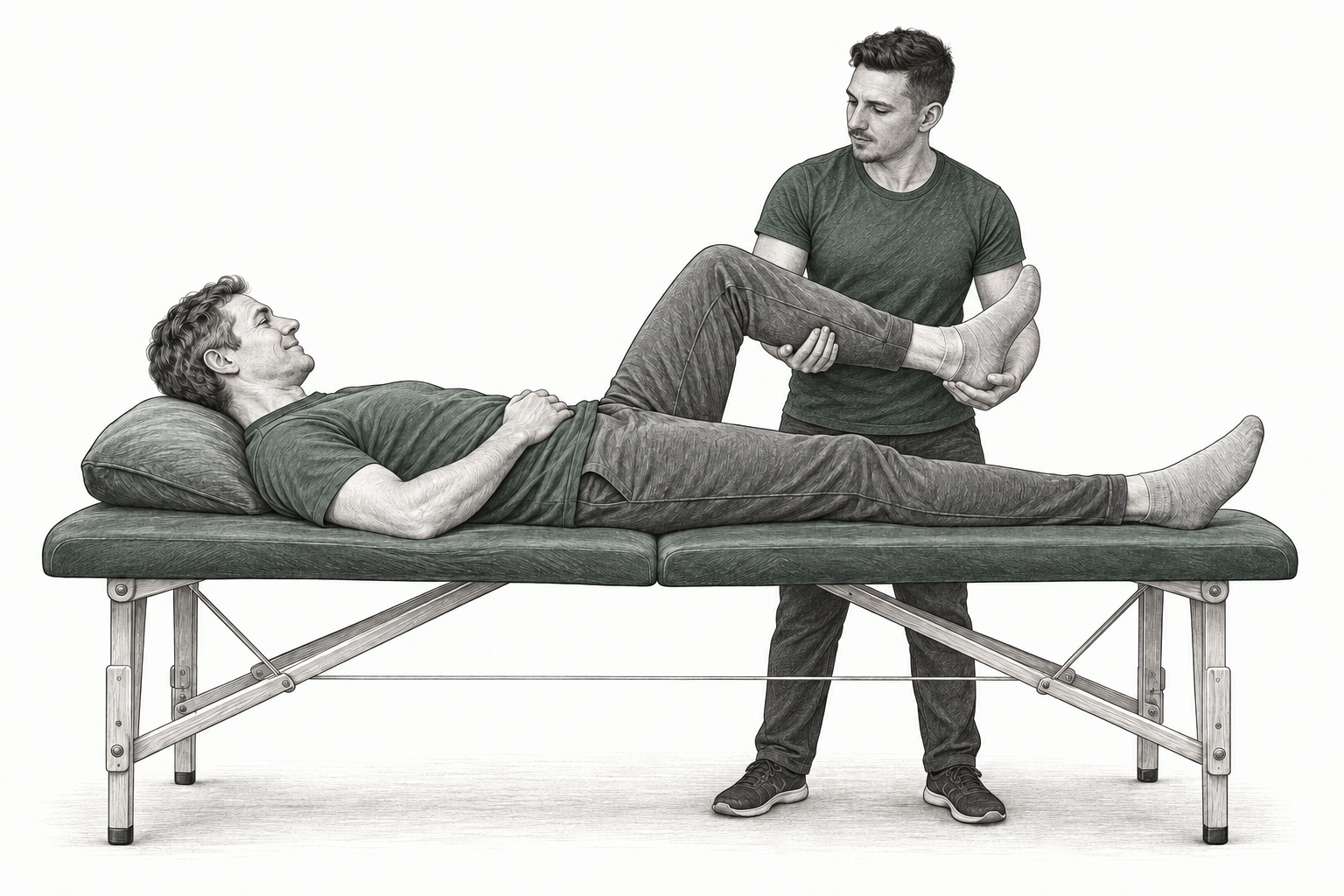
Ann and Chris Frederick developed Fascia Stretch Therapy (FST) and the Stretch to Win training system. Chris Corona trained through that system.
Training progresses from supported whole-body movement to more detailed assessment and sports applications. Level II includes specific hip and shoulder capsule techniques and compression for overly mobile regions. Level IV adds further hip and shoulder work and assessment of areas such as the spine, ribs, foot, and ankle. It is the highest of the Institute’s current four levels.
Sources: Stretch to Win: the method’s history · Stretch to Win: four training levels · Level IV certification and scope
Several things may affect how a stretch feels: how tissues resist movement, how much stretch feels comfortable, and how muscles respond to touch and support.
Researchers are still studying FST. A small low-back-pain pilot began with 11 people and had no comparison group. It reported changes in pain and movement, but cannot show lasting benefit or which part of FST caused the change.
Opening up the capsule describes the treatment aim: less restriction and easier movement around the joint. Related hip-traction experiments show that traction can produce separation while force is applied. They did not test FST, and do not establish permanent capsule enlargement or joint spacing changes after a session.
Changes in tissue resistance, stretch tolerance, and protective muscle activity may also contribute to easier movement. A change in range alone cannot show which tissue or mechanism produced it.
Sources: 2025 review: stretching, tolerance, and stiffness · Hip traction: mechanical experiment · Langevin et al.: tissue sliding in back pain · FST low-back-pain pilot: original poster
Start with a conversation about your health and goals. Chris provides bodywork within his massage license and can discuss how it fits with your existing care.
Tell Chris about recent surgery, joint instability, reduced sensation, and any restrictions from your clinician. Some situations need medical advice before hands-on care.
Stop and tell Chris if you feel sharp pain, new numbness, or dizziness. He can adjust or stop the method. Chris does not diagnose medical conditions; FST does not replace medical care or rehabilitation.
Reviewed by Chris Corona · Review confirmed